

The origins of Kazakhstan's innovative ecosystem
The period of the Kazakh SSR
The history of modern IT in Kazakhstan began in the Kazakh Soviet Socialist Republic in 1954. At that time, the first Laboratory of Machine and Computational Mathematics (LMVM) was established at the Academy of Sciences of the Kazakh SSR, specifically in its then-capital, Almaty. On its foundations, research centers grew: the Institute of Mathematics and Mechanics, the Institute of Nuclear Physics, and the Institute of Informatics and Management Problems.
It began with calculating mineral deposits for geologists and analyzing astrophysical phenomena. In the 1930s, machines intended for population censuses (Tabulator T5) were used; then, in the 1960s, vacuum tube machines (Ural-1 and BESM-3M) appeared, followed by more powerful machines in the 70s and 80s (Minsk-32) and pioneering Collective Use Computing Center (VTSKP) networks connecting computers between different institutes. Until the end of the 1970s, the trend of implementing various automation systems increased, and thus the need to educate a growing number of specialists rose, building a human resource base.
Later, in the 1970s, the renowned Republican Physics and Mathematics School (RFMSz) was founded, combining rigorous science with a passion for technology. It shaped the creators of the Russian search engine Yandex and the Kazakhstani fintech Kaspi.kz, as well as employees of giants such as Google, Microsoft, and Amazon.
On the territory of the Kazakh SSR, there were at least five major "closed cities" (ZATO) strictly guarded research centers, testing grounds, and strategic production sites. It was here, in the 1950s, that the first Soviet cosmodrome, Baikonur, was established.
While Baikonur was commonly perceived as a "Russian island" on the Kazakh steppe, the reality was more complex. Although specialists from centers in Moscow, Leningrad, or Kyiv indeed dominated the command staff and top technical management, residents of the Kazakh SSR collaborated on research facilities used in the space and defense industries. Among local professors of exact sciences, one can find biographical episodes of working in "closed institutes," and these individuals later became the academic staff of the universities of the new Kazakhstan.
The difficult 1990s of the last Soviet republic
Kazakhstan gained independence in 1991 as the last republic to formally leave the Soviet Union. Following the collapse of the USSR, the defunding of research institutes, the severing of existing economic ties, and the state's transformation led to the breakdown of state-sponsored science. The situation was dire; there were instances where education was funded by teachers or graduates who took out bank loans themselves. Among the authorities, a conviction prevailed that developing domestic technology was not essential, as revenues from the extractive industry would allow for the purchase of foreign solutions. This perspective only changed after various oil price crises.
Highly educated personnel of European descent left Kazakhstan, repatriating to Russia, Ukraine, Israel, or Germany. The brilliant engineers who remained on the ground often changed professions and moved into trade. They bought and sold goods at local and Chinese bazaars. The first Kazakhstani technology companies (such as Logycom or Glotur) began by trading, and today they are large private corporations.
The beginnings of the digital state
Digitalization first appeared in the financial sector, which was expanding rapidly and possessed the necessary resources to build infrastructure. A significant role in the digitalization of banks was played by the company Olivetti, which brought the first ATMs and payment systems to Kazakhstan. American giants IBM and HP also appeared, introducing their technologies and providing training and support. Later, banks such as Kazkommercbank and the Bank of Astana pioneered the development of online services in Kazakhstan. As early as 2002, Kazkommercbank attempted to create an "internet-bazaar," but the market was not yet ready for such a solution at that time.
The digitalization of public services was one of the impulses that influenced the country's digital leap and increased trust in new technologies. In 2006, the first e-government portal (eGov.kz) was launched. It was modeled after the Singaporean system, focusing on building comprehensive databases of citizens and companies. State software was developed by Kazakhstani firms that had initially specialized in accounting software. The successes of these local companies gradually fostered programming communities in Astana, Almaty, and Karaganda.
Data from the years 2010–2024 show a long-term improvement in Kazakhstan's position in the UN E-Government Development Index. The country advanced from 46th place in 2010 to 24th in 2024, noting a distinct acceleration after 2018. During the same period, Poland improved its position from 45th place in 2010 to 24th in 2020, but saw a decline in subsequent years. This means that in the latest edition of the ranking, Kazakhstan surpasses Poland in terms of the level of development of digital public administration.
Year | 2010 | 2012 | 2014 | 2016 | 2018 | 2020 | 2022 | 2024 |
Kazakhstan | 46. | 38. | 28. | 33. | 39. | 29. | 28. | 24. |
Poland | 45. | 47. | 42. | 36. | 33. | 24. | 34. | 34. |
The table shows the position of Kazakhstan and Poland in the UN E-Government Development Index in 2010-2024, publicadministration.un.org
Kaznet, or the Kazakh Internet
The birth of the Kazakhstani internet (Kaznet) occurred with the creation of the .kz domain in 1994, which was then managed by the Relcom company from Semipalatinsk (now Semey). In the early years, the Internet was primarily used by embassies and foreign corporations that could afford the very expensive data transfer. At that time, the telecommunications enterprise Kazakhtelekom held a monopolistic position with access to the infrastructure.
Increased competition in the telecommunications market and price democratization, along with "smartphonization," gradually popularized Internet access. Interest in the Internet also grew thanks to "pirate entrepreneurs" selling movies, music, and games in local markets. After 2010, a mobile Internet breakthrough occurred; the massive increase in the number of internet users was driven by news portals, social media, as well as banking and government applications.
Fintech phenomenon Kaspi
The phenomenon of Kaspi.kz became a great symbol of Kazakhstan's digital transformation. Kaspi Bank, which started as a traditional bank, evolved after 2014 into a powerful 'super-app' merging banking, a marketplace, and e-government services. Kaspi replaced daily cash transactions with QR code payments, even among the older generation. This Kazakhstani technological product created a market of millions of people accustomed to handling their affairs via smartphone. In 2024, the company debuted on NASDAQ, which was an absolute breakthrough for the entire Central Asian region.
A political vision of modern Kazakhstan
The mass adoption of mobile Internet, the successes of homegrown fintech, and e-government have proven that Kazakhstan possesses untapped potential to develop its technological sector. In 2017, President Nursultan Nazarbayev's administration developed an ambitious "Digital Kazakhstan" strategy for the years 2017–2022 and gave it high priority. The goal was to develop an innovative sector and diversify the economy, which had been based on resource extraction.
The framework of the state program to transform Kazakhstan into a modern state consisted of five pillars:
Digitalization of key economic sectors – agriculture, industry, transport.
Transformation into a digital state – elimination of queues in government offices, e-government.
Implementation of the "Digital Silk Road" – expansion of fiber optics and 4G/5G.
Human capital development – raising digital competencies starting from the youngest generation.
Creation of an innovation ecosystem – support for startups, technological entrepreneurship, and investment in innovation.
Creation of the Astana Hub ecosystem
The concept of a startup institution
The vision came from the top, but the architects of the changes who developed the technical aspects were young officials and managers. As a consequence of consultations between government representatives and entrepreneurs from the technology sector, the decision was made to focus on the Astana Hub concept proposed by Magzhan Madiyev, co-founder of the startup Naimi.kz (a mobile services marketplace in Kazakhstan). Madiyev wanted to change the business culture from hierarchical to a more open one, similar to Silicon Valley. According to his concept, the project was to create a state institution that does not behave like a state.
The Astana Hub project began in 2017 as a coworking space. Madiyev, approaching the project like a startup, funded the office rent, computer purchases, and employee salaries out of his own pocket. At the beginning, startups were invited to participate en masse without strict criteria, in order to demonstrate interest and build the foundations of the ecosystem.
The Hub's headquarters were located in the capital due to its proximity to the state administration and the presence of a similar innovation park structure already in Kazakhstan's largest city, Almaty. Over time, it was decided to allocate modern, futuristic pavilions, left vacant after the EXPO-2017 world exhibition, to the project. Specific legal regulations and tax breaks had to wait until the end of 2018.
However, Madiyev's innovative approach to project management collided with the post-Soviet bureaucratic culture. Just before the official opening of the Hub in 2018, he was removed from management. At that point, the project took on a rigid, clerical character and did not develop as planned.
After two years, at the request of the Ministry of Digitalization, Madiyev returned to the role of CEO, restoring the startup work culture. In his view, the state should not enter into business, but only support it and create conditions for development. Agile methodology was adapted for the management of Astana Hub, creating a unique approach to working in a state institution (with dailies, sprints, iterations, etc.). Madiyev transformed the state institution into a dynamic and open one, impressively increasing the growth of the IT sector's share in the economy.
 On the photo: Astana Hub CEO, Magzhan Madiyev / profit.kz
Significant growth of the Hub's development
Since 2020, Astana Hub has surged even further due to the rapid demand for digital services caused by the pandemic, financial injections from cryptocurrency mining, and the relocation of technology companies from Eastern Europe (Russia, Belarus, Ukraine). Partnerships were established with Google for Startups, Microsoft for Startups, Plug and Play, Huawei, and Draper University. There has been a gradual shift from a policy of resident quantity to one of quality. More requirements were introduced, and the focus shifted toward foreign expansion and building global unicorns. Kazakhstan has become an R&D center for local startups that are conquering foreign markets.
Kazakhstan was the second-largest country after the United States in terms of Bitcoin mining in 2021–2022, reaching approximately 18% of the global hashrate share. Subsequently, its share fell to about 13%, and as of 2024, according to some sources, it stands at around 2.5%. The state responded quickly to this new trend, introducing a legal framework for cryptocurrency mining in 2020 and legalizing it as a normal business.
Growth Results
In 2020, IT services revenue stood at $128 million, and by 2025, it exceeded $1.5 billion. The majority of exports are generated by local startups. The main foreign markets receiving IT services from Kazakhstan are the United States, Russia, Ireland, Cyprus, and Mexico. According to Madiyev, companies that decided to relocate generate approximately 30% of the revenue. International companies among Astana Hub residents include Glovo and Epam Systems.
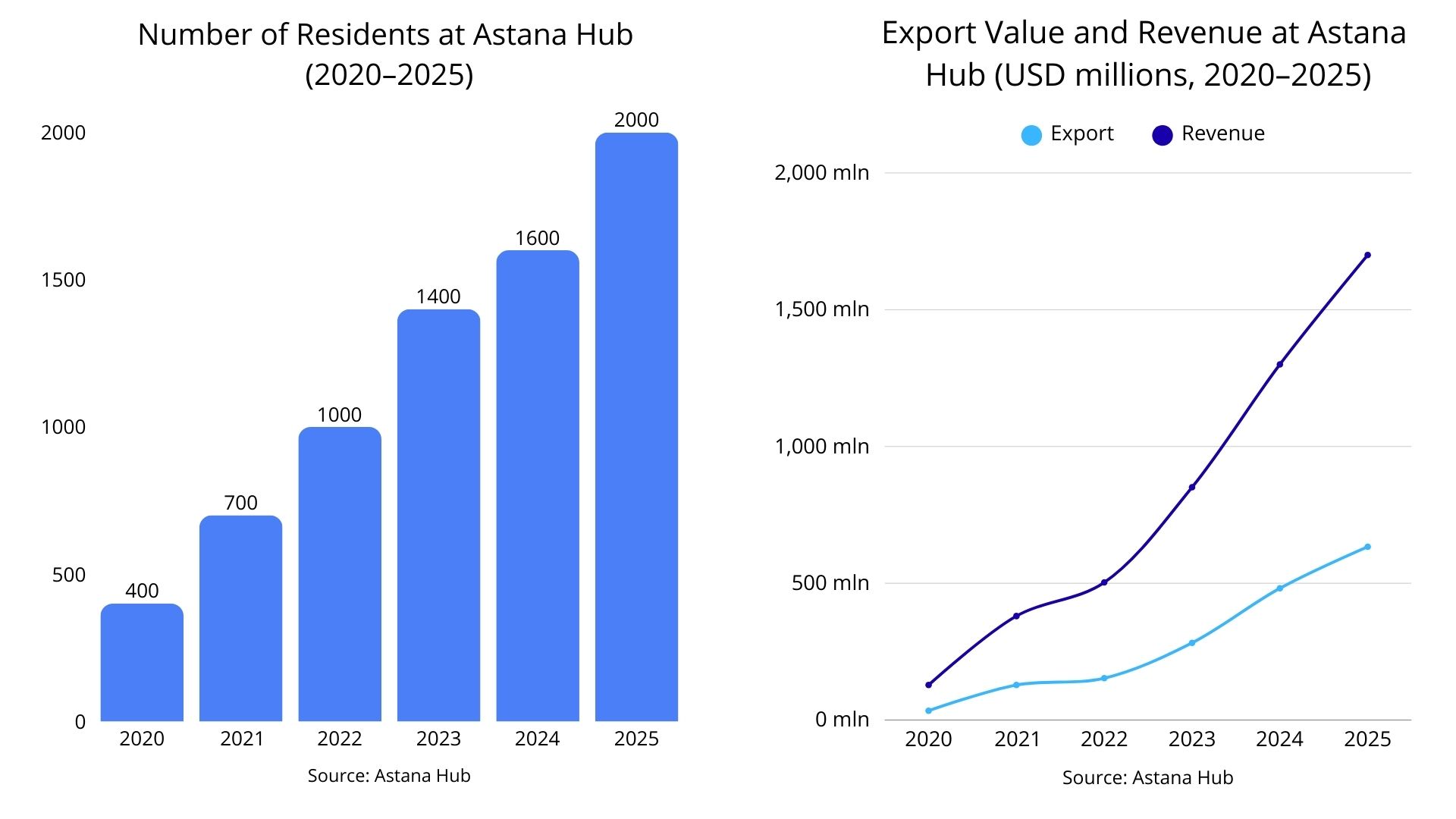 The picture contains statistics of Astana Hub residents - their number, export value and income in 2020-2025, astanahub.com
Privileges, obligations and legal framework of residency
Astana Hub constitutes a unique growth platform, offering competitive operating conditions for startups. Among the benefits it offers is an exemption from almost all taxes (CIT, VAT, PIT), which allows for rapid reinvestment. There is no obligation to hire local specialists, and one can take advantage of simplified law in the form of a visa regime for foreigners (IT visa). Access to free coworking spaces is also provided for the Hub's residents.
It is possible to base disputes on English Common Law rather than local Kazakhstani law. This is facilitated through the AIFC (Astana International Financial Centre) launched in 2018. It guarantees security and predictability for foreign investments. In cooperation with Astana Hub, the AIFC extends a legal umbrella over innovations that develop faster than legal codes. Within this collaboration, the FinTech Lab operates—a dedicated environment that allows for testing innovative financial products without the need to immediately obtain full, costly licenses.
One of the residents' obligations is to contribute 1% of their revenue to the Hub, which serves as the foundation of its financial self-sufficiency and fuel for its investment arm. With growing IT exports reaching hundreds of millions of dollars, this 1% generates a massive operating budget. This money does not disappear into the state budget but is reinvested directly into the ecosystem.
However, the benefits of residency in Astana Hub come with specific requirements aimed at professionalizing startup activities. The Hub places immense emphasis on intellectual property protection and actual product development—startups are required to report progress, register copyrights, and update business plans with every significant change in strategy. Late or incorrect reports, as well as conducting business inconsistent with the declared profile, can result in immediate removal from the residency list.
The Astana Hub Portal is not just an ordinary website, but a platform that fully digitalizes bureaucracy and all key processes—from residency registration and tax incentive applications to IT visa requests. The portal also serves as a monitoring center for business plans and quarterly reports, operating in full integration with the state administration.
Importantly, Astana Hub operates extraterritorially—a company does not need to be physically located in Astana to enjoy the privileges. The system itself is evolving, and recently, entities engaged in pure cryptocurrency mining have been excluded from the residency group.
International AI Center
Recently, Kazakhstan's AI ambitions have been concentrated in the Alem.ai international center, which functions as a specialized arm of Astana Hub. Located in the iconic Nur Alem sphere—the geometric heart of the Expo complex—it is an eight-story research and development space where artificial intelligence is intended to become the country's "new oil". Thanks to cooperation with NVIDIA (access to H200 chips) and partners from the United Arab Emirates (G42/Presight), startups have gained access to a national supercomputer and massive computing power.
One of the goals of AI development has become the achievement of digital sovereignty through the creation of the country's own data center and the implementation of Kazakh Large Language Model (KazLLM)—a local large language model. The Kazakh language model is intended to make the local ecosystem, and that of all Central Asia, independent of external technologies.
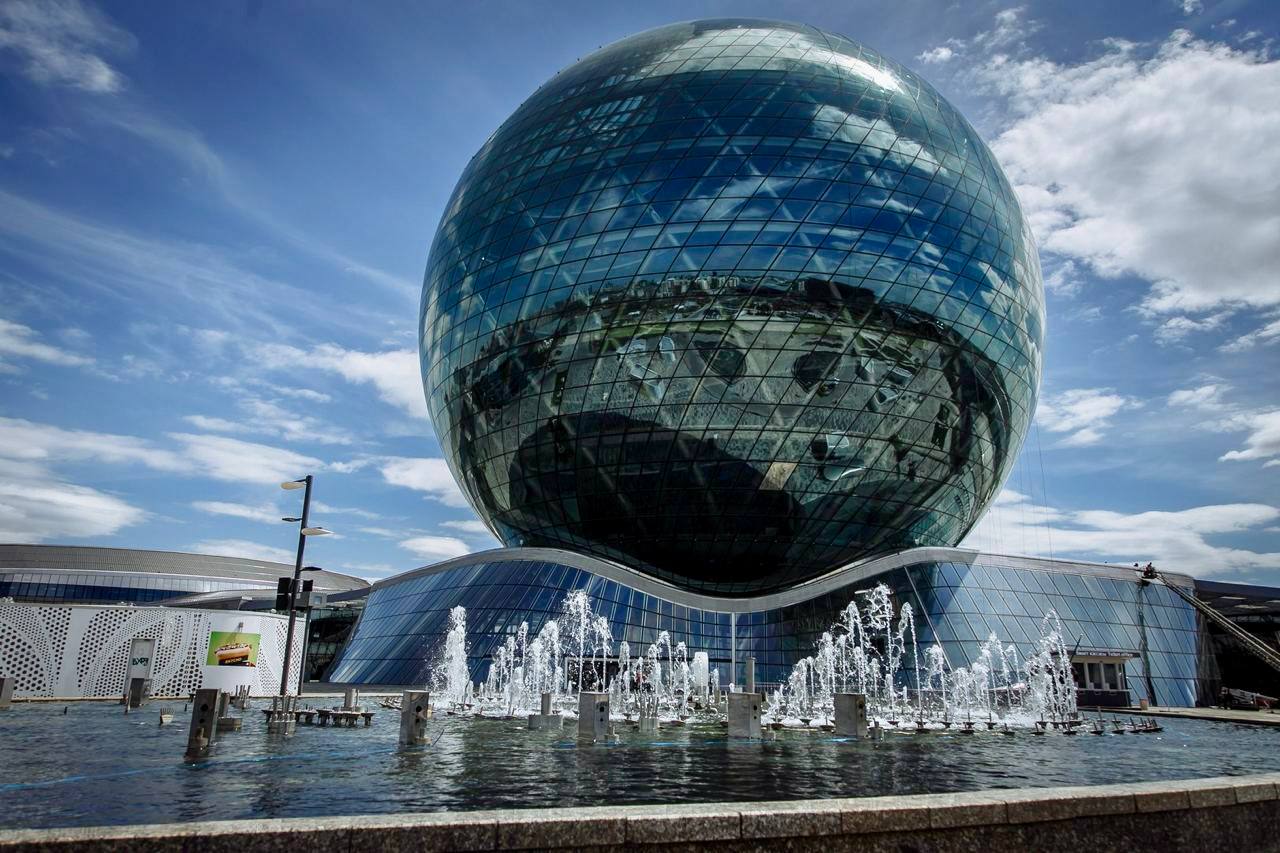 On the photo: Nur Alem, AI Center in Astana / qazexpocongress.kz
Venture Capital
Astana Hub is driving an increasingly mature Venture Capital ecosystem, which has undergone a transformation from simple grants to professional equity investments. Astana Hub Ventures has become a significant player, providing capital to the best startups emerging from acceleration programs. To prevent brain drain and enable global expansion, the Hub co-founded the Qazaqstan Venture Group (Alem Ventures)—a fund with capital exceeding $100 million. This financial architecture is complemented by the Astana Venture Club, which brings together over 500 business angels and institutional investors.
Startup acceleration and development
The Hub acts as a "startup success ladder" that begins in Kazakhstan's regional areas. Through a network of local offices, the organization reaches talent across the entire country, offering educational programs in business management and international expansion. In this way, a complete development path is built: "from the region to Silicon Valley."
Within the Astana Hub ecosystem, several key programs drive this growth:
Startup Garage: Supports projects at the early stages of development. It offers mentoring and access to infrastructure, enabling teams to test ideas and build MVPs (prototypes). This serves as the foundation that allows Kazakhstani startups to mature faster for global market requirements. In 2025, the program attracted over $300,000 in investment.
Silkway Accelerator: A flagship program realized in collaboration with Google for Startups. For 12 weeks, it offers support to selected startups at the Product-Market Fit stage. Participants receive access to knowledge and mentoring completely free of charge. The program concludes with a final Demo Day, where projects are presented to international Venture Capital investors. In 2025, program graduates attracted over $550,000 in investment and secured preliminary agreements totaling $1.4 million.
Hero Training: Astana Hub sends the most promising founders on a 5-week intensive course to Draper University in California. Graduates gain not only entrepreneurial knowledge but also increased self-confidence and invaluable networking opportunities.
Al-Farabi Innovation Hub: Acts as a complement to the Astana Hub ecosystem. It offers acceleration programs, mentoring, access to investment, and support in international expansion (e.g., to MENA countries). The initiative assists startups in scaling their operations and introducing technologies to global markets.
Specialized AI Acceleration:
Industrial AI Acceleration: Focused on implementing artificial intelligence in industry (e.g., production line optimization). The program includes pilot implementations with major industrial partners. In 2025, 7 such pilots were launched, with another 10 currently in preparation.
AI'preneurs: A four-month residential cycle in Astana for AI startups. It comprises three stages: team formation, concept and prototype development, and full-scale product manufacturing. Participants have access to technical resources, such as datasets and GPU units, as well as consultations with industry experts.
Development of human capital
Astana Hub supports not only established companies but also educates the personnel that fuel this ecosystem.
Tech Orda: One of the most important IT education programs in Kazakhstan. It is targeted at citizens of Kazakhstan who want to acquire new skills in the field of new technologies. Funding does not go directly to the student but to private programming schools that undergo accreditation by the Hub.
Alem Innovative Programming School: Similar to the model of the famous French School 42. It has no teachers, grades, or traditional lectures. Learning takes place in a peer-to-peer system through the resolution of practical projects. The school is free, open 24/7, and selection is conducted through logic games and online tests.
Startup School and ScaleUp: Courses and training in the sphere of business education. Startup School offers online and stationary courses for beginners, teaching basics from building an MVP to acquiring the first customers. More advanced training for existing startups, teaching team management and international expansion, takes place under the ScaleUp initiative.
IT-Aiel: A Hub initiative dedicated to women, aiming to increase their participation in the technology sector. The program offers free education, allowing participants to build remote careers and financial independence. In 2025, the offer was expanded with the Aqyl Tech project, which focuses on mass teaching of digital competencies and artificial intelligence.
Tomorrow School: A next-generation school profiled for training specialists in the field of artificial intelligence. Similar to Alem School, it is free and available 24/7, based on a peer-to-peer model without traditional lectures, with a total focus on practical projects. The school operates directly alongside Alem.ai.
TUMO Astana: An international branch of the prestigious network, serving as the "innovation nursery" in the Astana Hub ecosystem. This creative education center attracts teenagers (ages 12-18), who develop competencies in 11 areas, such as programming, robotics, and game dev.
Kazakhstan as an export brand
The vision of Astana Hub does not end at the borders of Kazakhstan, which is why a network of foreign representations is being systematically built—it is a form of technological diplomacy. These are not isolated Astana Hub offices, but partnership initiatives created together with, among others, the Uzbek IT Park. These foreign offices are meant to support startups from Central Asia or Eurasia in specific countries. One such office is the Silkroad Innovation Hub in Palo Alto, and similar representations are located in London, Dubai, or Shanghai.
One of the strategic initiatives of Astana Hub and IT Park Uzbekistan—the largest technology zones in the region—is Central Asia Innovation Hubs. The initiative aims to develop the startup ecosystem, connect talents, and promote innovative projects from Central Asia on the international stage. As part of the project, startups from Kazakhstan and Uzbekistan have been presented at events such as Web Summit or TechCrunch Disrupt.
The Astana Hub ecosystem has already generated several projects that have successfully expanded beyond the Kazakhstani market, securing financing in the United States and Europe:
Higgsfield AI (Deep Tech / AI): Developing advanced systems for generating video and images using AI. Currently one of the fastest-growing startups in the world; as the first Kazakhstani unicorn, its valuation exceeded $1 billion.
Cerebra (MedTech): Utilizing AI for early detection of strokes based on CT scans.
Citix (Smart City): Building interactive street panels that analyze traffic, weather, and air quality, while displaying advertisements and important municipal messages.
Arlan Biotech (Biotech / AI): Using algorithms to design synthetic antibodies, which significantly accelerates the process of creating new drugs and diagnostic tests.
 On the photo: Yerzat Dulat, creator of Higgsfield AI / digitalbusiness.kz
Challenges and prospects
The ambitions of Astana Hub extend far beyond being a local technology park. Regionally, the Hub aims to integrate with other technology zones in Central Asia to create an alternative global technology market through joint initiatives with Uzbekistan, Kyrgyzstan and Tajikistan. It is positioned as a safe harbor for ventures with capital and technology from both the West and the East.
Thanks to technology education programs targeting various segments (mass programs, elite schools, young talents), Kazakhstan is set to become a digitally sovereign country offering its own technological solutions. By 2030, the Kazakhstani authorities want the IT sector to have a share of GDP similar to the extractive sector. Astana Hub’s goal for 2030 is to create at least five unicorn startups listed on foreign stock exchanges. The "Made in Kazakhstan" brand is intended to ensure that the country is associated with high quality and innovation, rather than just raw materials.
It is rightly noted, however, that Kazakhstan also faces significant problems in the IT sector:
Venture Capital: Startups in Kazakhstan struggle to secure large funding rounds (above several million dollars), which forces them to migrate abroad.
Human Capital: While there is no shortage of juniors, there is a significant lack of experienced seniors, particularly in AI technology.
Energy Infrastructure: Supercomputers and data centers require massive amounts of energy, and the country faces the challenge of modernizing its power grid.
Geopolitical Balancing: The country must navigate between strategic partnerships with the USA (NVIDIA chip supplies, cooperation with Google and Microsoft) and the proximity and technological dominance of China (Huawei infrastructure).
Brain Drain: Despite excellent schools, the best talents often dream of working for large foreign corporations. The challenge lies in creating wage and cultural conditions that encourage the most gifted to remain in Kazakhstan.
Support for the IT sector, initiated during the administration of Nursultan Nazarbayev, has gained new momentum under President Kassym-Jomart Tokayev. The new leader has prioritized digitalization processes, reorganizing the ministry into a new specialized Ministry of Digitalization and AI and pushing for aggressive infrastructure development. A key element of this vision is the construction of national data centers. Concurrently, through the mass educational program AI-Sana, the administration aims to train citizens in artificial intelligence, building human capital capable of supporting a modern, data-driven economy.
Summary
Astana Hub is not just futuristic architecture in the capital, but above all, a mental shift. It is the final transition from an extractive economy to a knowledge-based economy, where startup and engineering culture meets the vision of a technocratic government. In a sense, IT history has come full circle—from closed Soviet science cities to an open digital world. Kazakhstan has created a new ladder of advancement, in which "aytishniki" (IT sector specialists) have taken the place of "neftyaniki" (oil sector specialists) in terms of earnings and prestige. Kazakhstan aspires to the role of a regional leader, while simultaneously collaborating and co-creating initiatives with other Central Asian neighbors to make the region a global player. Focused on global expansion, the ecosystem consistently builds the brand of Modern Kazakhstan, prioritizing the development of human capital supported by artificial intelligence.
Tags:
[AFSA.aifc.kz] Astana International Financial Centre – FinTech Lab. https://afsa.aifc.kz/fintech/
[Aisana.kafu.edu.kz] About Aisana – Al-Farabi Innovation Hub. http://aisana.kafu.edu.kz/about/
[Alem.ai] Alem.ai – AI Research & Development Hub. https://alem.ai/en/
[Astana Hub] AI’Preneurs: novyi akcelerator dlia sozdaniia startupov v sfere iskusstvennogo intellekta. https://astanahub.com/ru/article/ai-preneurs-novyi-akselerator-dlia-sozdaniia-startapov-v-sfere-iskusstvennogo-intellekta
[Astana Hub] Alem AI – kak Kazakhstan vykhodit v lidery v sfere iskusstvennogo intellekta. https://astanahub.com/ru/article/alem-ai-kak-kazakhstan-vykhodit-v-lidery-v-sfere-iskusstvennogo-intellekta
[Astana Hub] Astana Hub v tsifrakh: kak mezhdunarodnyi innovatsionnyi klaster postroil ekosistemu na 43 mlrd za 7 let. https://astanahub.com/ru/article/astana-hub-v-tsifrakh-kak-mezhdunarodnyi-innovatsionnyi-klaster-postroil-ekosistemu-na-43-mlrd-za-7-l
[Astana Hub] Podvodit itogi 2024 goda: rekordnye dostizheniia i perspektyvy dlia budushchego. https://astanahub.com/ru/article/astana-hub-podvodit-itogi-2024-goda-rekordnye-dostizheniia-i-perspektivy-dlia-budushchego
[Astana Hub] Proekty Aqyl Tech i IT-Aiel: masovoe obuchenie tsifrovym navykam i II zapustili dlia kazakhstantsev. https://astanahub.com/en/article/proekty-aqyl-tech-i-it-aiel-massovoe-obuchenie-tsifrovym-navykam-i-ii-zapustili-dlia-kazakhstantsev
[Astana.tumo.kz] TUMO Astana – International Creative Learning Center. https://astana.tumo.kz/en/
[AstanaTimes.com] Astana Hub welcomes its 1000th participant, continues to promote export of IT products. 2023. https://astanatimes.com/2023/01/astana-hub-welcomes-its-1000th-participant-continues-to-promote-export-of-it-products/
[AstanaTimes.com] Kazakhstan to establish Ministry of Artificial Intelligence and Digital Development. 2025. https://astanatimes.com/2025/09/kazakhstan-to-establish-ministry-of-artificial-intelligence-and-digital-development/
[DigitalBusiness.kz] Dostup cherez gorodskoy telefon: sumasshedshie tseni i nizkaya skorost – vspominaem, s chego nachinalsya Kaznet. 2024. https://digitalbusiness.kz/2024-06-13/dostup-cherez-gorodskoy-telefon-sumasshedshie-tseni-i-nizkaya-skorost-vspominaem-s-chego-nachinalsya-kaznet/
[DigitalBusiness.kz] IT istoriya Kazahstana. https://digitalbusiness.kz/it-istoriya-kazahstana/
[DigitalBusiness.kz] Kak zarozhdalas IT otrasl v Kazahstane. 2024. https://digitalbusiness.kz/2024-05-13/kak-zarozhdalas-it-otrasl-v-kazahstane/
[DigitalBusiness.kz] Programmisti iz 70-h: rasskazivaem istoriyu RFMSH. 2024. https://digitalbusiness.kz/2024-06-28/programmisti-iz-70-h-rasskazivaem-istoriyu-rfmsh/
[DigitalBusiness.kz] Rezydenty Astana Hub za god zarabotali bolshe 1,7 mlrd. 2026. https://digitalbusiness.kz/2026-02-13/rezidenti-astana-hub-za-god-zarabotali-bolshe-1-7-mlrd/
[DigitalBusiness.kz] Vidim, chto eksport sostavit 1 mlrd: Magzhan Madiev ob itogah 2025 dlia kazahstanskogo IT. 2025. https://digitalbusiness.kz/2025-12-26/vidim-chto-eksport-sostavit-1-mlrd-magzhan-madiev-ob-itogah-2025-dlya-kazahstanskogo-it/
[ER10.kz] Zachem Kazahstanu Ministerstvo II i kak ono budet rabotat. https://er10.kz/read/analitika/zachem-kazahstanu-ministerstvo-ii-i-kak-ono-budet-rabotat/
[FDI Intelligence] Kazakhstan AI & Digital Startups Overview. https://www.fdiintelligence.com/content/b4210975-fcb8-4d18-9844-9bbe6b4c1afa
[Forbes.kz] Kazahstanskiy startap Higgsfield otsenili v 1,3 mlrd. https://forbes.kz/articles/kazahstanskiy-startap-higgsfield-otsenili-v-13-mlrd-d52f50
[Forbes.kz] Pochemu kazahstanskiy Higgsfield ne prodal svoi biznes Masku i Tsukerbergu. https://forbes.kz/articles/pochemu-kazahstanskiy-higgsfield-ne-prodal-svoy-biznes-masku-i-tsukerbergu-9b5dfa
[Forbes.kz] Printsip samostoyatelnosti. https://forbes.kz/articles/printsip_samostoyatelnosti_1677006398
[Gov.kz] Ministry of Science and Higher Education – news. https://www.gov.kz/memleket/entities/sci/press/news/details/965293?lang=ru
[Inbusiness.kz] Tokaev predlozhil Astanu v kachestve centra II partnerstva s Yaponiej. https://www.inbusiness.kz/ru/last/tokaev-predlozhil-astanu-v-kachestve-centra-ii-partnerstva-s-yaponiej
[Kursiv.kz] IT – nowaja nieft: kak riezidienty Astana Hub zarabotali $1,6 mlrd za 5 liet. https://kz.kursiv.media/2023-11-10/skvr-astanahub/
[MinerSource.shop] Where are the top 10 Bitcoin mining-friendly regions in 2025? 2025. https://minersource.shop/2025/05/14/where-are-the-top-10-bitcoin-mining-friendly-regions-in-2025/?utm_source=chatgpt.com#_101
[Profit.kz] Iz istorii razvitiya IT v Kazahstane. https://profit.kz/articles/2035/Iz-istorii-razvitiya-IT-v-Kazahstane/
[WNP.pl] To azjatycki tygrys IT. W ważnym rankingu już wyprzedził Polskę. https://www.wnp.pl/tech/to-azjatycki-tygrys-it-w-waznym-rankingu-juz-wyprzedzil-polske,940909
[YouTube] Astana Hub Overview – What is Astana HUB and what benefits does it offer? https://www.youtube.com/watch?v=YB3RGx0jMVg&
[YouTube] Ekosistiema Astana Hub: startapy ot nulia do iedinoroga (dokumientalnyj film). https://www.youtube.com/watch?v=VGbIZWWPYS8
[YouTube] MOST Podkast №30 | Jadro ekosistiemy: kak Astana Hub formirujet budushchieje tiechnologij. https://www.youtube.com/watch?v=D4m4S8bUwbg
[YouTube] Nam nie nuzhno pytatsia povtorit poiskovik ili miessiendzhier | Magzhan Madiiev | Liudi diela. https://www.youtube.com/watch?v=KcVnShCpP9k
[YouTube] #16 | Magzhan Madiiev, CEO Astana Hub: Kak sozdat usloviia dlia pojavlieniia kazakhstanskikh iedinorogov? https://www.youtube.com/watch?v=kjTxJHz5wDk